
|
|
Ramsar COP10 debriefing session |
|
 In addition to the KIWC staff, several individuals from the Kushiro region participated in the COP10 and related events. Aiming to report on the results of activities at the conference and related events and share information about local wetlands to help those in the Kushiro region use such areas more effectively, a debriefing session was held at the Kushiro Tourism and International Relations Center on December 16, 2008. Participating in the session were fifty local residents and people involved in wetland conservation as well as four individuals who visited Changwon from the Kushiro region, including junior and high school students.
Following the KIWC Secretariat's report on the conference, Professor Satoshi Kobayashi from the Kushiro Public University of Economics (who served as a staff member of the Ramsar Convention Secretariat from 1991 to 1996) explained the newly adopted resolutions and wetland conditions in South Korea, among other matters.
Next, Ms. Ayami Kawamura (a third-year junior high school student) and Ms. Natsuko Sato (a first-year high school student) reported on the Kodomo Ramsar project - an international children's workshop held on the sidelines of COP10 in Changwon - in which the two students represented Kushiro Wetland. Ms. Kawamura presented her impressions of interaction with children from other countries while engaging in collaborative work or introducing wetlands and reported on her visits to overseas. Having often participated in international wetland-related events for children like this since she was an elementary school student, Ms. Sato played a major role at the COP10 opening ceremony, where she represented Japanese children and introduced Kushiro as a past COP host venue. During the debriefing session, Ms. Sato presented the history of Kodomo Ramsar's activities, talked about what she had learned from experience and gave her opinions on wetland conservation from the viewpoint of children.
|
|
Winter Eco-tour 2009 held to mark World Wetlands Day |
|
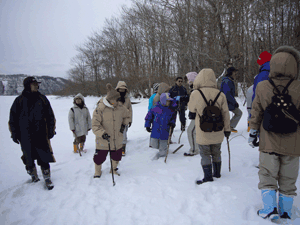 To mark this year's World Wetlands Day, the Winter Eco-tour 2009 was held for locals on January 31, 2009. Participating in the tour were 16 people ranging from elementary school students to people in their 80s and staff members.
Those present took a winter-only steam locomotive that runs in the eastern part of Kushiro Wetland, observed the Kushiro River from a train window and visited Lake Toro, which is connected to the Kushiro River at its tributary.
At Lake Toro, which was covered with snow and ice, they observed the lakeside terrace and sedimentary soil using a soil probe, and envisioned how the environment around the lake has changed.
They also deduced animal behavior based on footprints left in the snow by Red squirrels and Ezo red foxes, and tried ice fishing for Japanese smelt. After this, they listened to presentations by officials from the local fisheries cooperative association about the ecology of the Japanese smelt, its relationship with river and lake environments and fishing operations in the wetland. At the end of the tour, the participants learned about the Ramsar Convention from explanations on World Wetlands Day and wetland-related quizzes.
Despite the bitter midwinter cold and freezing temperatures at Kushiro Wetland, the participants were full of vigor and enjoyed exploring the lakeside area by making their way through the snow.
|
|
Participation in a tour and symposium to mark World Wetlands Day in South Korea's Gyeongnam |
|
In Changwon City, where people's excitement over the success of the COP10 meeting held there on World Wetlands Day in 2008 remains unabated, an eco-tour and a symposium for citizens were held as commemorative events timed to coincide with World Wetlands Day. On February 1, 2009, approximately 200 citizens assembled in front of the Gyeongnam Provincial Government Office in Changwon, from where a convoy of five buses took them on a tour to wetlands in southern Goseong County.
In the county, places that used to be connected to the sea were separated and became ponds. While numerous migratory birds make stopovers there, the regional government is considering converting the land into agricultural fields, and citizens, including children, spent an hour observing wetlands that are torn between environmental conservation and development. After that, the participants observed a feeding colony of Eurasian black vultures (a rare sight in South Korea and Japan) in a field next to a junior high school.
On the following day, February 2, a symposium was held under the auspices of the Gyeongnam Ramsar Environmental Foundation at the Convention Center in Changwon, the COP10 venue.
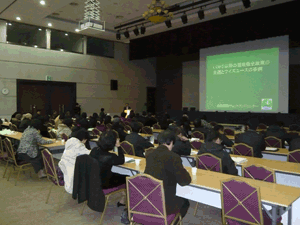 Following speeches by the Vice-Governor of Gyeongnam Province and the Deputy Mayor of Changwon City, the deputy Secretary General of KIWC presented Changes in the Wetland Conservation Plan in Kushiro after COP5 and the Introduction of Wetland Activities. Next, Professor Gea-Jae Joo from Pusan National University spoke on Changes after COP10. The speech was followed by presentations and discussions with the participation of 11 local organizations including NPOs and sponsors, and approximately 250 citizens who assembled there asked a succession of questions.
|

|