|
Current Status of JICA Trainees
Lam Dorji, Executive Director
The Royal Society for the Protection of Nature, Bhutan
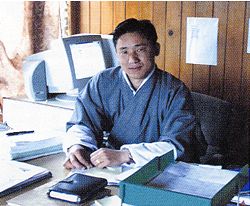 In 1996, I attended the training program on "Wetland Conservation and Protection of Migratory Birds" organized by JICA in close collaboration with the Kushiro International Wetland Centre (KIWC). The training program not only provided the theoretical aspects of wetland conservation but also gave participants an insight into the practical management of wetlands. The scenic and vast Kushiro wetland is truly inspirational and has left an impression on me as to how important wetlands can be in generating environmental as well as developmental benefits. The harmonious coexistence of nature and the people of Kushiro is something which I will always look to as an example. In 1996, I attended the training program on "Wetland Conservation and Protection of Migratory Birds" organized by JICA in close collaboration with the Kushiro International Wetland Centre (KIWC). The training program not only provided the theoretical aspects of wetland conservation but also gave participants an insight into the practical management of wetlands. The scenic and vast Kushiro wetland is truly inspirational and has left an impression on me as to how important wetlands can be in generating environmental as well as developmental benefits. The harmonious coexistence of nature and the people of Kushiro is something which I will always look to as an example.
Ever since the training program, my interest in wetland management has been given a major boost. In 1998, I decided to study the most important wetland in the Kingdom of Bhutan i.e., the Phobjikha wetlands. As a research topic for my Master's program, I studied the relationship of the Phobjikha community with the wetland as the winter habitat of the endangered Black-necked Cranes. Based on the findings of my research, a project named "Integrated Black-necked Crane Conservation and Development Program" was initiated by the Royal Society for the Protection of Nature (RSPN) in 1999. This project aims to build Phobjikha into a model Integrated Conservation and Development Program area. Through this project, RSPN hopes to develop wetland conservation as a basis for economic welfare of the community. The conservation importance and scenic beauty of the Phobjikha wetland provide an excellent ecotourism destination, which promotes the economic welfare of the people, which in turn promotes protection and conservation by the local people. The Phobjikha ICDP is a model in the making and it will not be long before conservation and development play complementary roles to take the community on the "middle path" or sustainable development path. This is a policy of the Royal Government of Bhutan.
Bhutan does not have large areas of wetlands in the first place. With the minimum amount of wetlands it possesses, the Royal Government is doing the maximum to conserve such ecosystems, although it is not a party to the Ramsar Convention. The Royal Society for the Protection of Nature, of which I am the Executive Director, is the only national environmental NGO in Bhutan. In close collaboration with the environmental sector agencies of Bhutan, RSPN is complementing the Royal Government's efforts to conserve the wetlands. In collaboration with donors and implementing agencies such as the Black Mountain National Park Management under the Nature Conservation Division, efforts are under way to keep the conservation work going. Through the continued assistance of JICA and KIWC, RSPN hopes to make Phobjikha into a micro level replication of the Kushiro wetland.
Hokkaido Overseas Technical Training Program
Edilberta Pruel-Eyas, the Phillippines
Introduction
I am from the Philippines. I am working in the Department of Environment and Natural Resources- Region 7 (DENR-7). My work experience in wetlands of Olango Island, Cebu, Philippines, leads me to conclude that more extensive studies on wetland conservation and its habitat need to be studied to ensure the ecological preservation of all living things in the wetlands. It was with these concerns in mind, that I decided to take this training course here in Japan, believing that they have an abundance of people with skills and expertise who are willing to share their knowledge.
Scope of the Training
I arrived in Japan on May 31, 2000. During my first two months, June and July, I studied the Japanese language intensively. This has become very useful in my daily life as well as a help in gaining confidence during my stay in Japan. I started the actual training course in August 2000. There are many things that I need to learn but since my stay in Japan was limited to ten short months, I decided to focus on top priorities in my field of endeavor. My training was conducted through lectures, field trips and interaction with the local people. The first training that I received was about bird banding at Lake Furen, Nemuro. My trainer was Mr. Takeyoshi Matsuo, who is an expert in bird banding and a member of the Yamashina Institute Banding Team. During this training, I learned the proper procedures for bird banding and how to handle different species of birds. Learning how to practice bird banding is very useful to me since it is one of the major activities in my office.
This training was followed by the training program on ecotourism. In this training I teamed up with three other JICA trainees; one each from Malaysia, Indonesia and Thailand. The training coordinator was Mr. Hisashi Shinsho from the Kushiro International Wetland Centre (KIWC). I had the chance to visit some natural parks and Ramsar sites in Hokkaido, such as the Kushiro Wetland, Shikaribetsu, Shiretoko, Kawayu, Kiritappu and Akan National Park. Each of these parks offers a good ecotourism program and I found out that some activities can be duplicated in our wetland areas as well. I participated in canoeing, kayaking, horseback riding, fish and bird watching, mountain bike riding and mountain climbing. Additional related studies were conducted concerning the Environmental Education Program (EEP). I also studied environmental education during my ecotourism training. Each of the parks which I visited has the capability to provide both indoor and outdoor environmental education and activities. I also studied environmental education and Wetland Center Management at Kiritappu Shitsugen Center (KSC) in Hamanaka, where I was stationed during my stay in Japan. Mr. Toshikazu Ito, the Project Chief of the Center was my trainer. He explained to me the planning and management systems of KSC. which have been developed over the past seven years since it was built. This experience serves as a guide for improvements to the management of our Wetland Center.
During this training course we also took several field trips, such as tours of Hokkaido, Kyoto and Tokyo, in order to get over our homesickness and add spice to our lives away from home. During our field trips, I was so impressed with Japan's advanced technology. In all aspects of training, I learned considerably, and things were positive and enjoyable. Whatever knowledge and skills that I have acquired here in Japan is not only beneficial to me but also to my country as a whole.
Life in Japan
Since this was my first trip to Japan, a lot of wonderful and unforgettable experiences, not only in my training course but also in the lifestyles and culture of Japan, gave me the challenge to survive in a place where living seemed so different from my origins. However, life could be much easier if everyone would have an open heart and get to know the friendly and hospitable Japanese people. I didn't encounter any serious problems except the language barrier one.
Application
My training course inspired me to work harder toward the sustainability of our wetland areas. Hence, I will not hesitate to use and share any knowledge that I have gained from this training course with my colleagues to ensure the protection and conservation of our wetland habitats, especially those of international importance.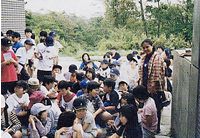
Conclusion
As to the merits of this training program, it is very helpful in raising the technical expertise of trainees for contributions to the development of their countries. To the people who run this program so well, I offer a grand salute and may they keep up their good work. May the friendship of Japan and the Philippines live forever.
Acknowledgement
Finally, I'd like to thanks to my fellow trainees from other countries whom I spent good time with them, to the staff of Kiritappu Shitsugen Center for their patience on me, to the Kushiro International Wetland Centre for their help and concern, to all my trainers for the knowledge and skills that I acquired from them, to my foster parent Mr. and Mrs. Toshikazu Ito and to the Hokkaido Government headed by Honorable Tatsuya Hori and staff for the constant help and cooperation . Most of all thanks GOD for my successful stay in Japan.

|

|
| NEXT |
|
|