|
Mr. Juris Soms, Latvia
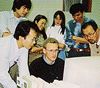 The training course provided me with an excellent opportunity to enhance my professional knowledge and techniques.ハ During the course, I learned about policy of nature conservation and systems for the protection and management of wetlands and the conservation of biodiversity in Japan. Meeting participants from different countries and exchanging opinions and experiences with them made the training course more interesting and meaningful. Lecturers described the current status of wetlands, nature conservation, artificial propagation of endangered species in Japan, implementation of wetland conservation measures and monitoring methods. The lectures and practices that I found particularly interesting were the following The training course provided me with an excellent opportunity to enhance my professional knowledge and techniques.ハ During the course, I learned about policy of nature conservation and systems for the protection and management of wetlands and the conservation of biodiversity in Japan. Meeting participants from different countries and exchanging opinions and experiences with them made the training course more interesting and meaningful. Lecturers described the current status of wetlands, nature conservation, artificial propagation of endangered species in Japan, implementation of wetland conservation measures and monitoring methods. The lectures and practices that I found particularly interesting were the following
* The monitoring methods used at Kushiro Wetland
* The techniques of nature conservation/restoration and bird banding
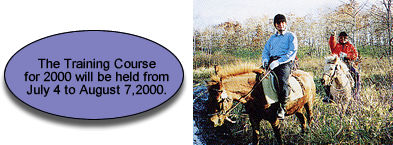
* The wise use of wetland ecosystems and eco-tourism (canoeing and horseback riding)
* The methods for conserving biodiversity and the National Survey on the Natural Environment
All the facilities we visited were perfect examples of harmony in planning, architecture, design, equipment and environment.ハ I was quite impressed by the "open door" policy for people, especially for kids. All sorts of indoor and outdoor activities were provided for children's environmental education.ハ I hope that our fragile environment will be in safe in their future.
Ms. Diah Qurani Kristina, Indonesia
 As a child, I heard that Japan was called "The Land of Rising Sun," so I considered it to be a warm country.ハ Later, I learned from a book that Japan had four seasons and a different climate from ours.ハ Since I had always been curious about Japanese culture, I was pleased to have the chance to visit Japan and participate in the JICA training course on the conservation of wetland ecosystems and their biological diversity. As a child, I heard that Japan was called "The Land of Rising Sun," so I considered it to be a warm country.ハ Later, I learned from a book that Japan had four seasons and a different climate from ours.ハ Since I had always been curious about Japanese culture, I was pleased to have the chance to visit Japan and participate in the JICA training course on the conservation of wetland ecosystems and their biological diversity.
I learned about bird banding, the protection and rehabilitation of Blackiston's Fish Owl and remote sensing technology.ハ The expertise I acquired during the training course will be useful for my future activities.ハ Since each participant came from different professional backgrounds, they sometimes showed their interests in different ways. However, I think that all agreed that raising public awareness was very important for the conservation of ecosystems.
I found the concept of eco-tourism interesting. I realized that eco-tourism plays an important role in protecting natural resources and encouraging their sustainable and wise use.ハ I also learned that eco-tourism provided local communities with economic and spiritual stimulation.ハ I would like to import the ideas of eco-tourism that I learned to my country.
I had a great time in Japan, and I am happy that I made friendships with the people I met through the training course.ハ I hope to keep in touch with them for a long time.
Mr. Jimenez Vilchez Ricardo Jesus, Peru
 It was a marvelous opportunity for me to learn how Japan went about to integrating its modern architecture and development with the beauty and authentic naturalness of its landscapes through a philosophy concerning the conservation of its biodiversity and the wise use of its resources. It was a marvelous opportunity for me to learn how Japan went about to integrating its modern architecture and development with the beauty and authentic naturalness of its landscapes through a philosophy concerning the conservation of its biodiversity and the wise use of its resources.
My stay in Japan with other participants, lecturers, coordinators and secretaries widened my concept of conservation and sustainable use of resources in a scientific way, as well as the role of society and humans.
Now, in Peru, we have developed a restoration activity called "water's mirror" (small lagoons with a depth of 12-28 inches) and I am in charge of establishing a laboratory, where water quality, flora, fish, insects etc. will be monitored.ハ We are working on ways of integrating the community with its wetland for increasing their quality of life.
Ms. Badamjav Odmaa, Mongolia
It was such a great experience for me to learn interesting and useful things during the training course, such as advanced monitoring technologies and management methods for wetland ecosystems and their biodiversity as well as the importance of conservation activities involving local people.
All the lectures were quite impressive. I found the environmental education class we attended with some students from Kiritappu High School to be particularly interesting. I believe these classes definitely help the students understand the importance of wetland conservation better, and I am sure that they are good opportunities for them to get to know each other in class.
We gained a better understanding of Japan and Japanese culture by meeting Japanese people and learning their language. I still remember the beautiful sights of Kushiro City and I won't forget the other participants and staff who supported us during the training course.
I will always treasure the friendships I made with my Japanese acquaintances - Japan has become my second home.
Lastly, we would like to add that all the above contributors expressed their gratitude to the training institutions, including the Environment Agency of Japan, JICA, JICE and KIWC, and all other people concerned.
|
PARTICIPANTS |
|
Mr. Khun Sovithea, Cambodia
Mr. Li Weiming, China
Ms. Diah Qurani Kristina, Indonesia
Ms. Sirivanh Khounthikoummane, Laos
Ms. Badamjav Odmaa, Mongolia
Mr. Vagi Rei, Papua New Guinea
Mr. Jimenez Vilchez Ricardo Jesus, Peru
Ms. Tippawan Sethapun, Thailand
Mr. Juris Soms, Latvia
Mr. Nguyen Van Loi, Viet Nam
|
|
|

|

|
| 次ページへ |
|
|